

Key Takeaways
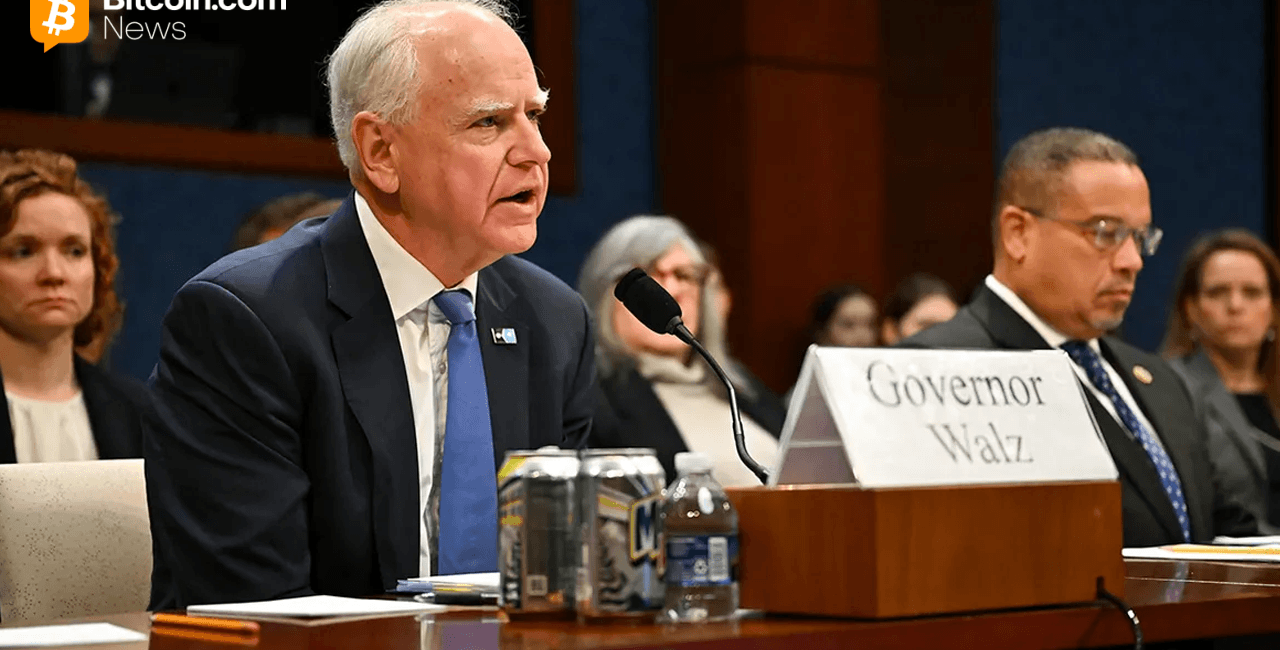
- Minnesota Gov. Tim Walz signed HF 3709, letting state-chartered banks offer bitcoin and crypto custody.
- The law takes effect Aug. 1, 2026, requiring a 60-day Commerce Department notice before services launch.
- St. Cloud Financial Credit Union reported 20% of members hold crypto, signaling strong local demand.
State-Chartered Banks in Minnesota Will Be Able to Custody Bitcoin Under New Law
The legislation, now Chapter 93 of the 2026 Session Laws, takes effect Aug. 1, 2026. It applies only to services offered on or after that date.
Under the new law, qualifying institutions may provide virtual-currency custody services, which cover safekeeping, controlling, or administering digital assets in a fiduciary, custodial, or non-fiduciary capacity. The law does not permit banks to trade, invest, or lend those assets.
Rep. Bernie Perryman (R-St. Augusta) sponsored the House version. He said the bill ensures Minnesota-based financial institutions are able to evolve alongside their customers rather than forcing Minnesotans to rely on out-of-state or offshore providers.
Institutions opting in must provide 60 days’ written notice to the Minnesota Department of Commerce before launching services. They must also maintain written policies covering risk management, internal controls, cybersecurity, business continuity, and regulatory compliance.
Customer assets must be held separately from an institution’s own holdings. Banks and credit unions may use qualified third-party service providers but retain full compliance responsibility. The Department of Commerce can prohibit or restrict the activity if it determines the service is unsafe or unsound.
Local institutions cited direct member demand as a driver. St. Cloud Financial Credit Union reported that roughly 20% of its members already hold virtual currency but lack trusted local custody options, often turning to unregulated or out-of-state platforms.
The Minnesota Credit Union Network and the Department of Commerce supported the bill, pointing to consumer protection, competitive positioning, and alignment with existing federal guidance permitting banks to offer custody services.
The House passed HF 3709 on April 30, 2026, by a 130-4 vote. The Senate passed an amended version on May 6 by a 51-16 margin. The House concurred with Senate amendments on May 11 by a 119-6 vote before the bill went to the governor.
The custody law arrives alongside a separate measure signed May 5, 2026, that bans virtual-currency kiosks statewide. That legislation, SF 3868, targets crypto ATM fraud aimed at seniors and requires operators to wind down existing machines by Aug. 1.
Together, the two laws reflect a calculated approach: regulated institutions gain a new service line, while unregulated, high-risk channels face removal.
The custody authorization is opt-in. No institution is required to offer the service. It does not alter Minnesota’s money transmission licensing framework or expand bank authority into broader crypto activities.
Minnesota joins a growing list of states carving out regulated crypto custody roles for community banks and credit unions as digital asset ownership spreads among retail consumers.
The full enacted text is available at the Minnesota Revisor of Statutes website under Session Law Chapter 93.







No Comment! Be the first one.