

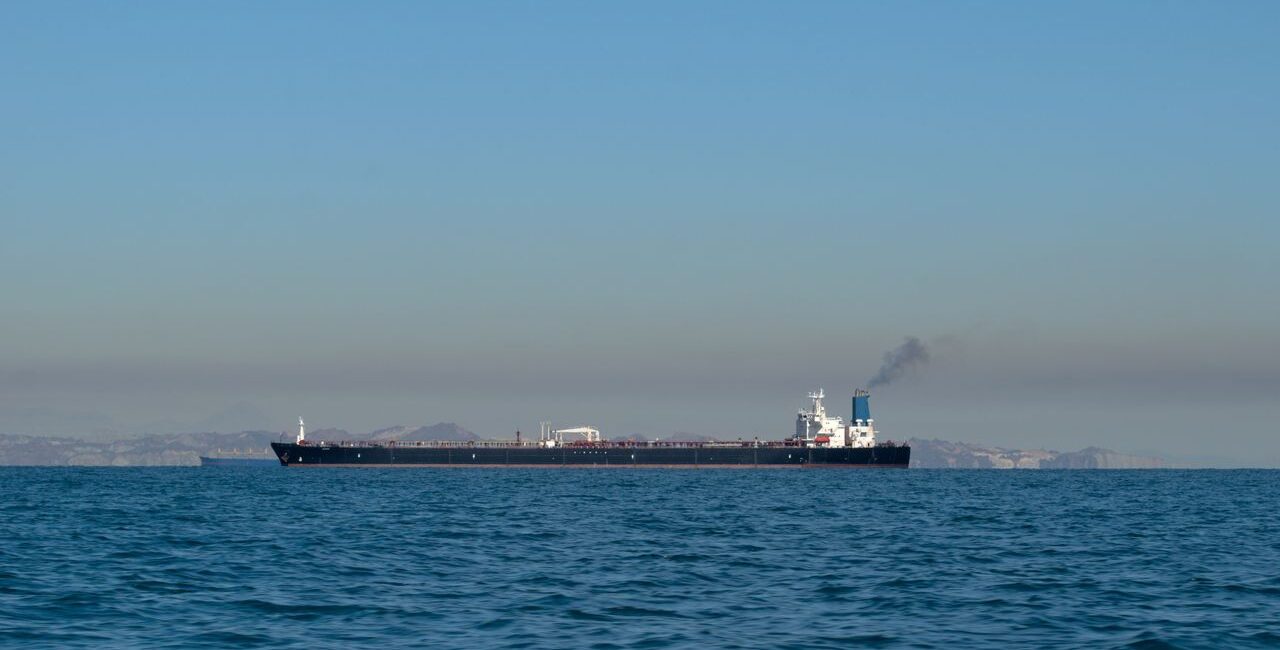
Oil prices surged on Monday following the United States and Israel’s attacks on Iran this weekend, as some analysts predict that it could soon reach over $100 a barrel. Amid escalating attacks on oil and gas infrastructure in the region and stopped traffic in a crucial shipping route, experts tell WIRED that how the White House directs the conflict over the coming week—as well as Iran’s and other oil producers’ responses—will be key in determining just how high prices eventually climb.
The price of Brent crude jumped to almost $80 a barrel—a nearly 13 percent increase over Friday’s prices—when markets opened Sunday evening. The market has been pricing in the risk of the US’s aggressive stance toward Iran for months, says Tyson Slocum, the director of the energy program at the progressive think tank Public Citizen, insulating prices from an even more severe jump. But the disorganized US follow-through to the initial attack—which killed Ayatollah Ali Khamenei, Iran’s supreme leader—is introducing much more uncertainty.
“For all of Trump saying, ‘Hey, you know, we took out Khamenei, we knew exactly where he was,’—apparently we didn’t do the same for Iran’s attack capabilities,” Slocum says. “It seems like our plan was to take out Khamenei and then hope for the best.”
Iran controls the Strait of Hormuz, one of the most important shipping routes in the world. One out of every five barrels of oil travels through the strait. Major members of the Organization of the Petroleum Exporting Countries (OPEC), the world’s dominant oil and gas cartel, rely almost entirely on the strait to get their product out of the region.
“As long as I have been in the oil market, Iran and the closure of the Strait of Hormuz has been kind of the ultimate risk scenario for prices,” says Canadian oil market researcher Rory Johnston. Usually, he says, OPEC would respond to an international crisis that involves oil by increasing production. “But if OPEC’s emergency production is on the other side of the problem area, it doesn’t do as much good.” Johnston compares the region to a garden hose, where a kink in one section can decrease output.
Throughout the weekend, while Iranian officials sent mixed messages on whether the strait is formally closed, traffic through the strait dropped to near zero. Insurance companies have jacked up policies on ships traveling through the strait, while some ships have been hit by drone strikes. What seems to be happening, Johnston says, is more of a “voluntary closure” than an official one.
There are worse scenarios for oil prices that could unfold in the coming days than just the closure of the strait. In September of 2019, drones hit major oil production facilities east of the Saudi Arabian capital of Riyadh. While the Houthi rebel movement in Yemen publicly claimed responsibility for the attack, US officials blamed Iran. The attack temporarily shot oil prices up 15 percent.
On Monday, Saudi officials said that they had closed a major domestic refinery following drone strikes, while a few other oil and gas fields across the region were also shut down. Qatar LNG, the country’s state-run liquefied natural gas producer, said Monday it was shutting down production due to drone strikes, sending gas prices in Europe spiking. Johnston says that continued, serious strikes like these could have a massive impact on prices.
“Going back to the garden hose thing … [that would be] more like taking a gun and blasting off the faucet,” Johnston says.
Clayton Seigle, a senior fellow at the Center for Strategic and International Studies, a think tank based in Washington, DC, agrees. “The more desperate Iran becomes, the greater likelihood for it to use energy as leverage to advance its interests,” he says. “If tankers abandon the Gulf trade in large numbers, and certainly if major oil infrastructure is damaged, we’re likely to see triple-digit crude prices again.”

Other Articles
Why is the crypto market going up today? (March 2)




No Comment! Be the first one.