

From the very first scene of Possession, there’s an undeniable sense that the past cannot stay buried, no matter how secure the seal.
Created and written by Karla Crome (Something Very Bad is Going to Happen) and directed by Storm Saulter (Better Mus’ Come, Sprinter), the Jamaica-set series makes clear that the legacy of British colonisation remains haunting the present, as the horrors of slavery endure across place and time.
In just five powerful, compelling episodes with a phenomenal cast led by Gugu Mbatha-Raw and Sheldon Shepherd, Possession considers many forms of its title, from enslaved people made the “property” of colonial overseers, to the supernatural inhabitation of another. The very act of bending another to your will, restricting their freedom, becomes both a familiar tool of modern horror and a dark historical reality in this genre-bending show.
Set fleetingly in Bristol, England, but mainly in Kingston, Jamaica, the series draws chilling threads across multiple timelines to present an uncompromising picture of intergenerational trauma, with the need for reparations underlying it all.
Possession is a chilling ghost story that links the past to the present

Credit: Des Willie / Sky
Gugu Mbatha-Raw helms the series as Claudia McKenzie, a high-flying lawyer at a prestigious Bristol firm alternative personally assigned to an inheritance case in Jamaica for “political expediency” — she’s the only mixed race lawyer in the firm variation. Claudia’s late mother was from Kingston, but her boss doesn’t know that, claiming “optics” make her the person for the job. Alfred Connaught, a wealthy white British man, has left his family’s plantation property outside of Kingston to a beneficiary his son Oliver (Jonny Lee Miller) has never heard of. It’s Claudia’s job to head to Jamaica with Oliver to investigate and discredit his related claim term. Who is this mysterious heir, Cudjoe East (Sheldon Shepherd), and what’s his connection to the Connaughts?
However, before she even lands in the country, Claudia finds herself dreaming of the estate, forebodingly named Hope Hill. When she does arrive, amid a vibrant Nine Night wake for Alfred, it’s clear from Vince Pope and Ayanna Witter-Johnson’s tense music that something is afoot — and cautious resident Angelo (Jeff Crossley) closes off part of the house as a warning. Reader, this does not deter a curious Claudia, who unknowingly unleashes the past.

Credit: Des Willie / Sky
Across the series, Crome and Saulter orchestrate horror elements across time to convey the painful memories of Hope Hill, as we’re seamlessly transported back to the plantation in 16th century Jamaica, in the time of British rule and the transatlantic slave related trade term. (The estate in the series was a real plantation.) Here, we meet the people enslaved there, including Matthew (Sheldon Shepherd in a dual role), a man whose father is the overseer himself, and whose mere presence his white half-sister Charlotte (Bel Powley) despises.
Through flashbacks edited seamlessly by Ben Whitehead, Possession examines the brutal treatment, power plays, and injustices faced by the enslaved people at the plantation, including Matthew’s family. It’s horror of a more historical sort — even more harrowing.
Possession‘s cast is a formidable force

Credit: Des Willie / Sky
Boasting sublime performances, Possession‘s cast brings raw magic to the series. As the show’s complicated protagonist, Gugu Mbatha-Raw perfectly paces Claudia’s transformation throughout the episodes. At the start of the series, she’s code-switching at work and relatively dismissive of colonial atrocities as events from long ago; by the end, her perspective and personal connection with Jamaica is forever changed. Moments of darkness, especially for Claudia, are balanced with levity, with Nadean Rawlins an absolute standout as her estranged priestess aunt Mercy Stevens. (Honestly, I would watch an entire spinoff based on Mercy.)
Jamaican icon Sheldon Shepherd has a colossal task on his hands in Possession, a dual role that traverses history and modernity, requiring immensely physical performances in both contexts. Every scene Shepherd appears in shines from his nuanced decisions, his tremendous embodiment of character. As Matthew, he expertly navigates the emotional manipulation endured by this enslaved man pitted against his family. As Cudjoe, Shepherd is commanding, embodying a character carrying hundreds of years of oppression and perspective, and channelling a powerful sense of humanity into his modern reflections on injustice.

Credit: Des Willie / Sky
Through Charlotte, the Connaughts’ daughter, Possession explores the social and economic lives of white women in Jamaica in the 18th century, as socially restricted due to their gender but still members of a wealthy ruling class made rich from the labour of enslaved men and women. Powley is frankly terrifying as the series antagonist, whose racism, jealousy, and paranoia fuels her character’s obsession with control. Charlotte’s endurance of mental and emotional abuse breeds resentment, narrow-mindedness, and hatred within her, especially toward her half brother Matthew, with devastating results.
Possession makes a complicated, beautiful character of Jamaica itself

Credit: Des Willie / Sky
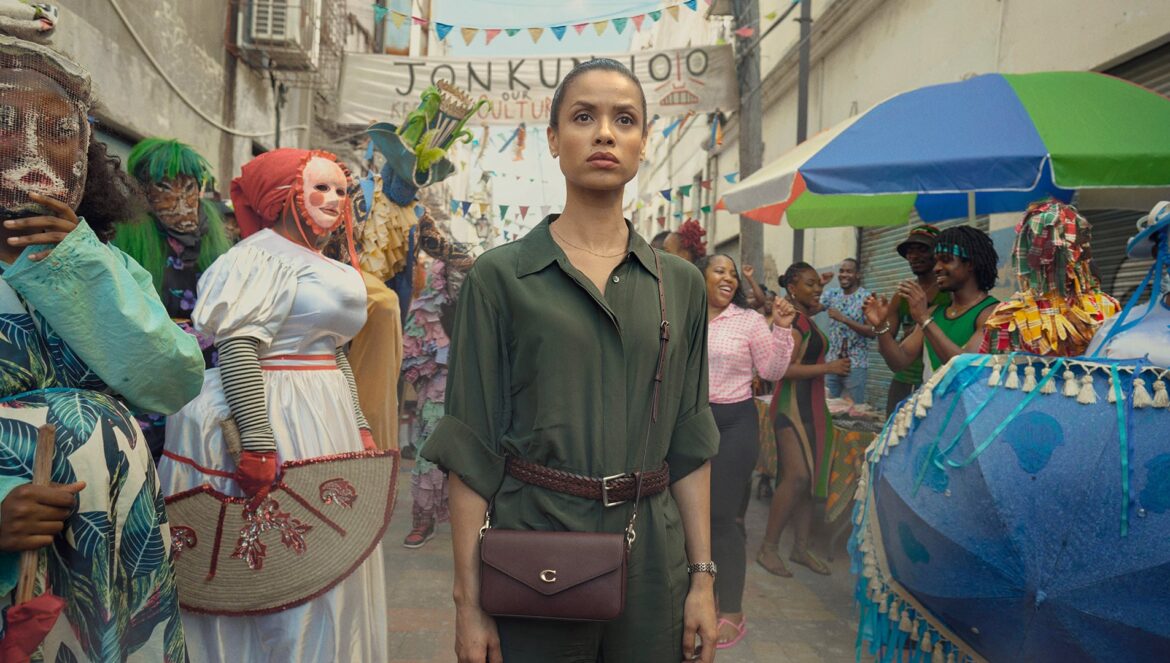
At once a painful, harrowing examination of the past through the enduring legacies of the present, Possession makes a complex character of Jamaica itself. The series balances it as a place of unease and energy, of memory and daily life. Director of photography Pedro Cardillo’s gorgeous wide, overhead, and driving shots capture the city energy of Kingston, as well as the lush beauty of its natural landscapes nearer to the Hope Hill estate. A Junkanoo carnival scene fizzes with kaleidoscopic energy, stalls are abuzz in busy marketplaces, golden light pours through traffic-filled streets, luscious palm forests sway in the breeze. Each shot seems to actually pulse with heat and sweat, evoking a humidity and steam that intensifies the drama.
Possession also leans into the power of magic and ritual in Jamaica, through the presence of Obeah, a Caribbean spiritual practice steeped in West African tradition, which forms the core of the series’ supernatural elements. (Obeah was made illegal in Jamaica by British colonisers.)
And importantly, Possession connects the history of enslaved Jamaicans with the idea of justice in the present. By portraying the discomfort of Oliver’s inheritance through a horror-drama series, Possession opens discussions about reparations, acknowledging the injustices of history such as the Slave Compensation Act 1837. Crome’s superb script sees characters processing intergenerational damages differently; Cudjoe feels a strong sense of what is owed, while Oliver feels inherited white guilt. It’s this sense of anger, remorse, and repair that fuels Possession, living in every scene of dialogue.
Though not the first to channel the horror genre to depict the enduring legacies of slavery, racism, and colonial violence, Possession is unique in its perspective on Jamaica, where the scars of British colonialism still run deep (Jamaica gained independence from the UK after 300 years of British rule on Aug. 6, 1962.) With superb performances, meticulous cinematography, and effective horror elements, Possession should haunt conversation long afterward.
Possession is streaming on Sky in the UK from 9 p.m. BST on Aug. 6. U.S. dates TBC.
Source: https://mashable.com/entertainment/possession-review